
History
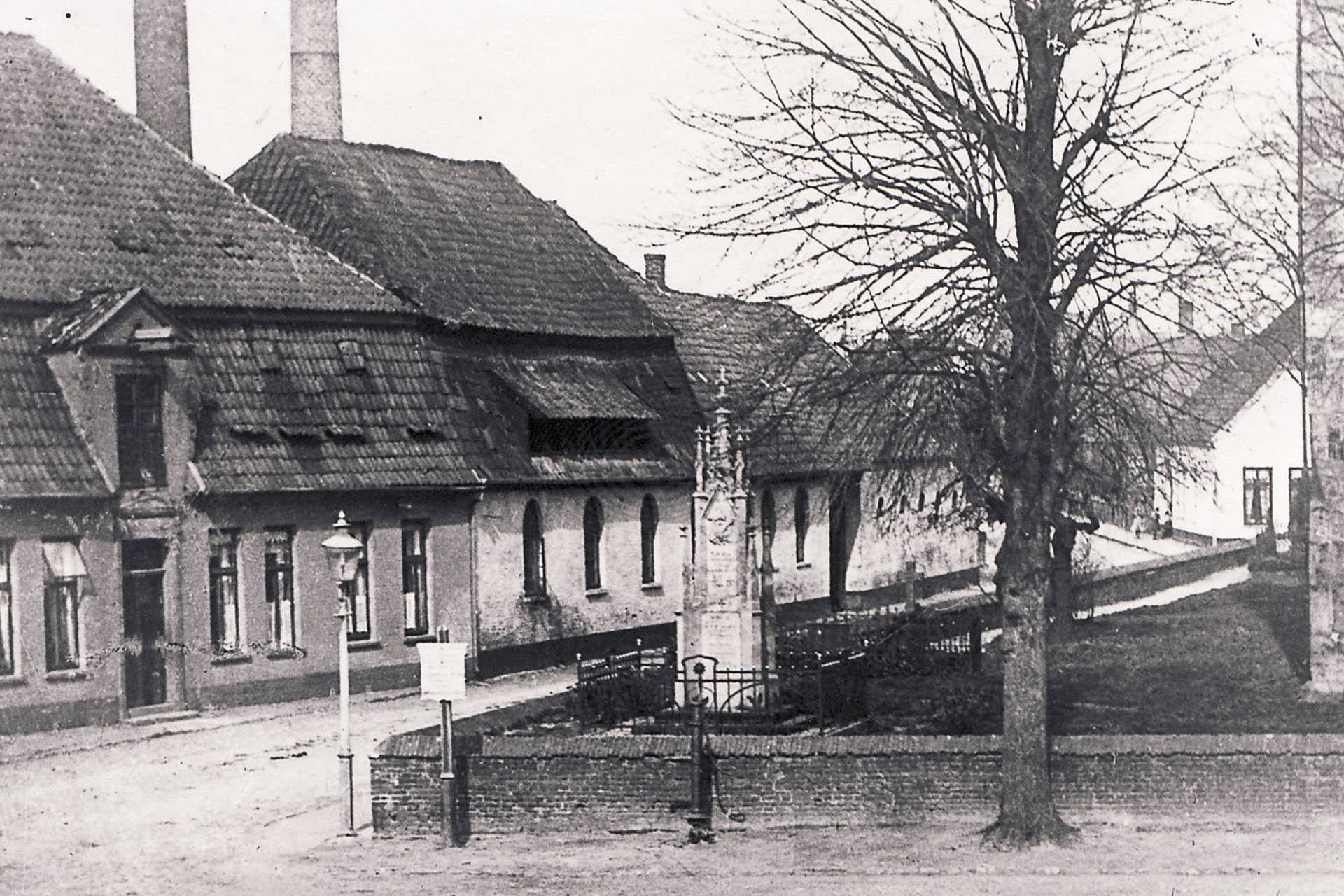
In 1813, Johann Koch founded the distillery. The Duchy of Oldenburg was at this time formally a French province. The Duke had emigrated to relatives in Russia. In the Ammerland region, French was the official language. Officials had sworn allegiance to Emperor Napoleon, and the Louis d’or was the official currency. Unmarried men were conscripted for military service, and French soldiers were stationed everywhere.
This was also the case at the Altes Stadthaus.
On 1 November 1813, French rule came to an end. Russian Cossacks were advancing. Then, during the autumn market, young lads from the Koch distillery threw stones over the church roof. On the other side, the French were encamped. Sergeant Frochot ordered his men to line up in front of the church door and fire across the square. Anna Elisabeth Hinrichs was fatally struck, and another visitor to the market later succumbed to his injuries.
On 6 November, the advancing Cossacks took the French prisoner. The negotiations of capitulation took place in the Koch house. In the days that followed, the Russians had to be provisioned. Koch’s claim read: “As my house was never empty of Cossacks during these days, and they always went into the distillery themselves and took whatever they wanted, I am charging 23 Reichstaler in total.”
It is in these turbulent times that the story of the Altes Stadthaus begins.
1815: In the years that followed, Genever was produced. In 1814, output amounted to 17,587 litres. But 1815 brought a deep setback: a fire broke out in the distillery and, within a short time, destroyed more than 50 buildings. The built-up area around the church (constructed in 1123) was completely destroyed. The reconstruction gave rise to the spacious “Alter Markt” (Old Market Square) as it stands today. After the rebuilding, Genever production rose steadily.
1820: Genever sales already reached the Jever and Butjadinger regions as well as the Hannover area.
1830: The licence for the Koch grain distillery was extended for another 10 years.
1865: After Johann Koch had been the sole proprietor for 52 years, the business was taken over by his grandson Georg M. R. Meinecke.
1868: A new production process was introduced. The final product resembled a pure grain spirit.
1872: Johann Koch died, presumably at the age of 89.
1885: The machinery was improved to allow especially fine processing of mash at varying strengths. The price of a 43–45% grain spirit was around 38 to 45 Marks per 100 litres.
1936 – 1986
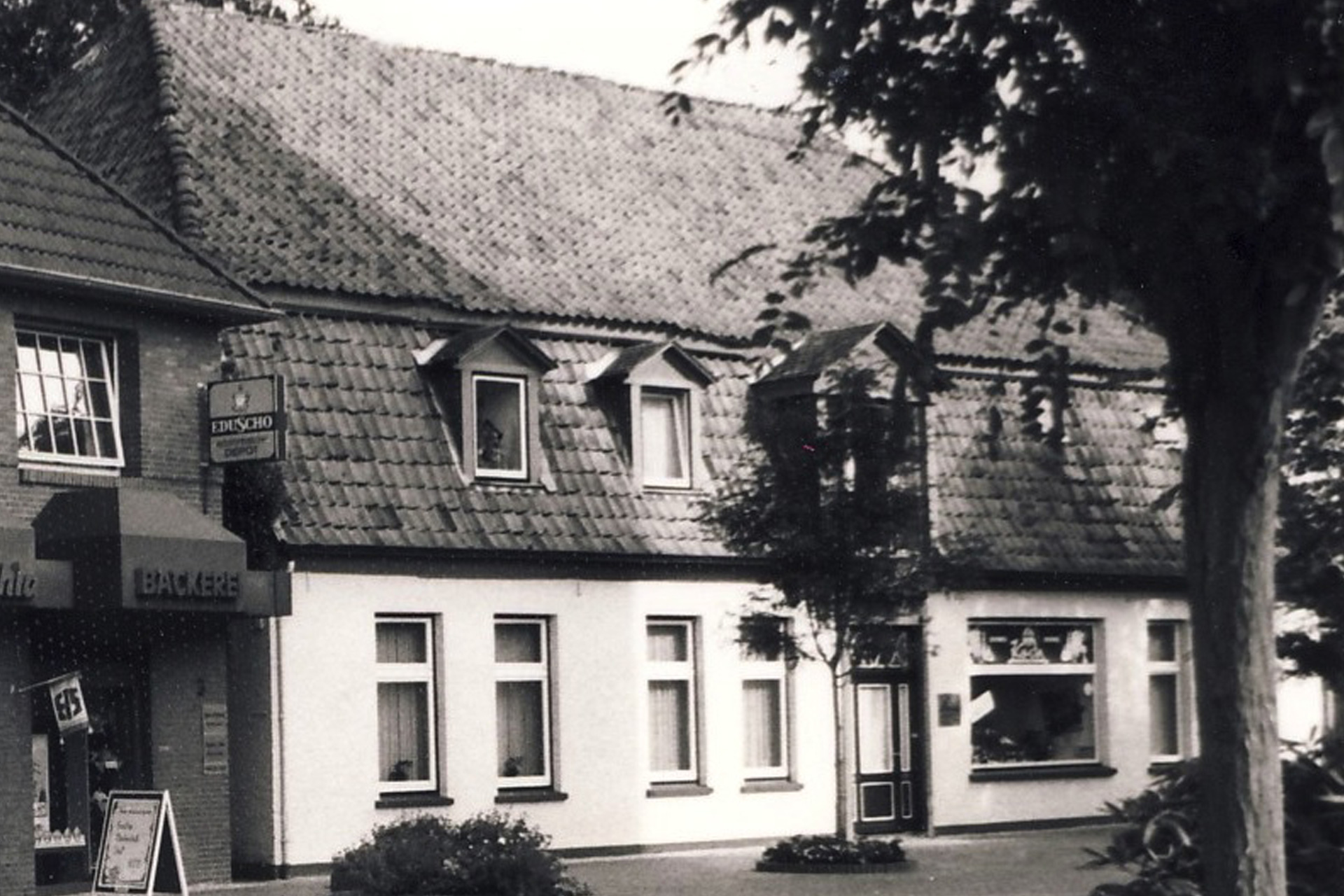
1936: Distilling on the premises continued only until the outbreak of the First World War, when the copper stills had to be surrendered for the production of weapons. After the war ended, schnapps was produced using bought-in grain. Annemarie Helms, née Meinecke, was now the sole owner. Her husband Hans-Karl Helms continued to run the family business until the late 1950s, when their son Günter — a master distiller who had worked at various other establishments — returned to take it over. In the 1970s, he expanded the spirits and wine trade with the addition of a wine tavern. He was supported in this by his wife Ingeborg until the business was sold in 1990. Together they had two children, Andreas and Ulrike, who grew up at the Altes Stadthaus.
1994-2013
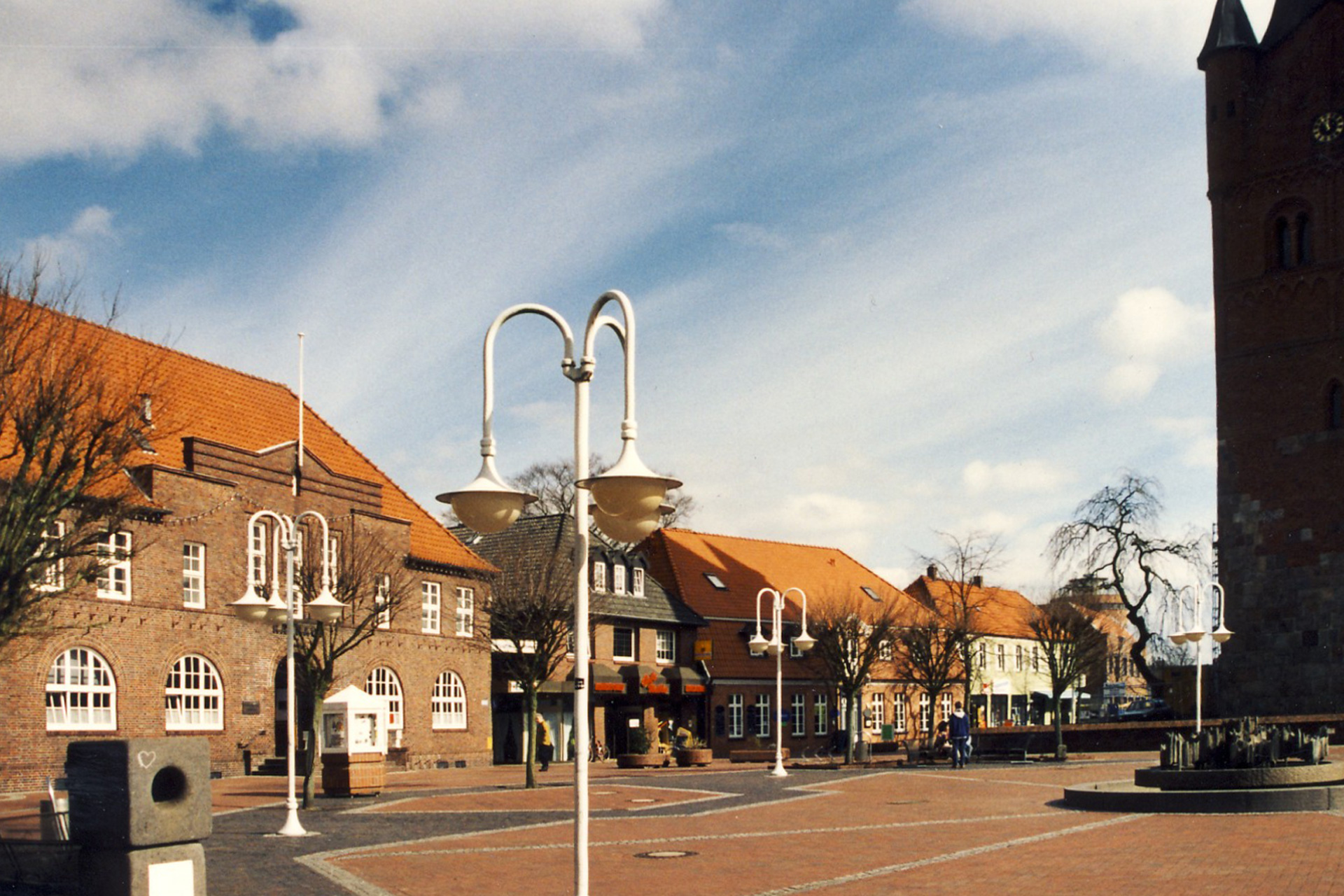
1994: The Altes Stadthaus became a hotel. Extensive renovation work was required on this listed building. In its design, it blends harmoniously into the architectural fabric of the Alter Markt.
2013: The Hotel Altes Stadthaus changed hands. Gerhard Tromm and Hermann Börjes — who had run the hotel since 1994 following its successful renovation, together with the leaseholders Iris and Bernd Rimke — sold the property to Hermann and Andrea Schüller. Bernd Rimke became co-owner and managing director, and also heads the hotel’s kitchen. His wife Iris Rimke looks after guest care and hospitality with her team. Andrea Schüller took over the marketing.
Various modernisations to the hotel’s interior and exterior are planned.
2020
2020: The Altes Stadthaus is joined by another historic hotel. On 1 September 2020, Thomas Pech sold the historic Hotel Busch to Hermann Schüller Immobilien GmbH & Co. KG.
Together, the Hotel Altes Stadthaus and the Hotel Busch are now operated under the umbrella brand “Die historischen Gasthäuser am Markt” (The Historic Inns on the Market Square). Bernd Rimke remains the managing director. The strategy of merging the two houses has its origins in their shared history dating back to the great Westerstede town fire of 1815, which broke out in the Koch grain distillery — today’s Altes Stadthaus.
After the fire, the town fathers of Westerstede, led by the city planner and bailiff Peter Ludwig Carl Friedrich von Negelein, seized the opportunity to redesign the town. A large square was laid out around St. Peter’s Church — the Alter Markt — bordered by townhouses and a network of streets. With the introduction of freedom of trade and a formal market system, Westerstede grew from a church village into a thriving commercial market town.
To provide accommodation for visitors from out of town, a new guesthouse was built in 1820 on the site of the burnt-down “Portmann’sche Wirtschaft von Quaden”, featuring an imposing neoclassical façade — a true ornament of the Alter Markt. This stylish establishment was run by Gottfried Lange of Bremen until 1833. After a brief period of ownership by Renke Quaden, the innkeeper Louis Busch took over in 1838, giving his name to this elegant hotel of excellent and cosmopolitan reputation.
